Resilient Roots Training
Staff Development | Instructional Support
Resilient Roots Training is a trauma-informed training and consulting agency dedicated to equipping educators, childcare providers, and any child-serving professional with practical tools to support children impacted by trauma and adversity. The training bridges the gap between behavioral challenges and underlying trauma by helping professionals shift from reactive responses to a proactive approach that promotes connection and resilience which helps students return to learning!
Trauma-informed Professional Development
Transform the Way Your Team Understands and Responds to Behavior.
Practical, relatable training that equips educators and youth-serving professionals with strategies to reduce escalation, strengthen relationships, increase engagement, and create environments where young people can thrive and continue to learn.


Training Opportunities

-
What looks like defiance, avoidance, or disengagement may be a response to stress, adversity, or feeling unsafe.
This training helps professionals understand how trauma and chronic stress affect behavior, relationships, emotional regulation, and readiness to learn.
Available as: 60-90 minute session | Half Day | Full Day
-
Knowing why behavior happens is important. Knowing what to do when it happens is essential.
This highly practical training equips professionals with strategies for responding when a young person becomes overwhelmed, withdrawn, resistant, angry, or emotionally dysregulated. Regulation is not the end goal, returning back to learning is.
Available as: 60-90 Minute Session | Half Day Intensive
-
Youth living in residential, foster care, or other out-of-home environments may bring histories of disruption, loss, instability, and adversity into their interactions with staff.
This training helps direct-care professionals understand how those experiences may influence trust, relationships, authority, emotional regulation, and behavior.
Available as: Half-day | Full-day | Staff in-service
-
Don't see exactly what your organization needs?
Your needs are unique. Your training should be too.
Resilient Roots Training creates customized professional development aligned with your population, goals, and challenges.
Schools • Alternative Education • Residential Care • Foster Care • Juvenile Justice • Child Welfare • Community Programs
Training your staff can relate to, apply, and remember.

Grounded in theory. Shaped by experience. Built for real-world application.
What Makes Resilient Roots Different?
Resilient Roots Training bridges the gap between understanding trauma and knowing how to respond to it.
Our training provides professionals with the foundation to understand how trauma, chronic stress, and adversity can affect the brain, behavior, emotional regulation, relationships, and a young person's readiness to learn and engage. But we don't stop with the theory.
We connect that understanding to real situations, real behaviors, and practical strategies professionals can use in their everyday work.
Through the Dixon 3R Framework™, training is intentionally designed to be:
Relatable. Connect the information to the people doing the work.
Relevant. Address the challenges professionals are actually facing.
Resolvable. Move beyond identifying problems to practical solutions and next steps.
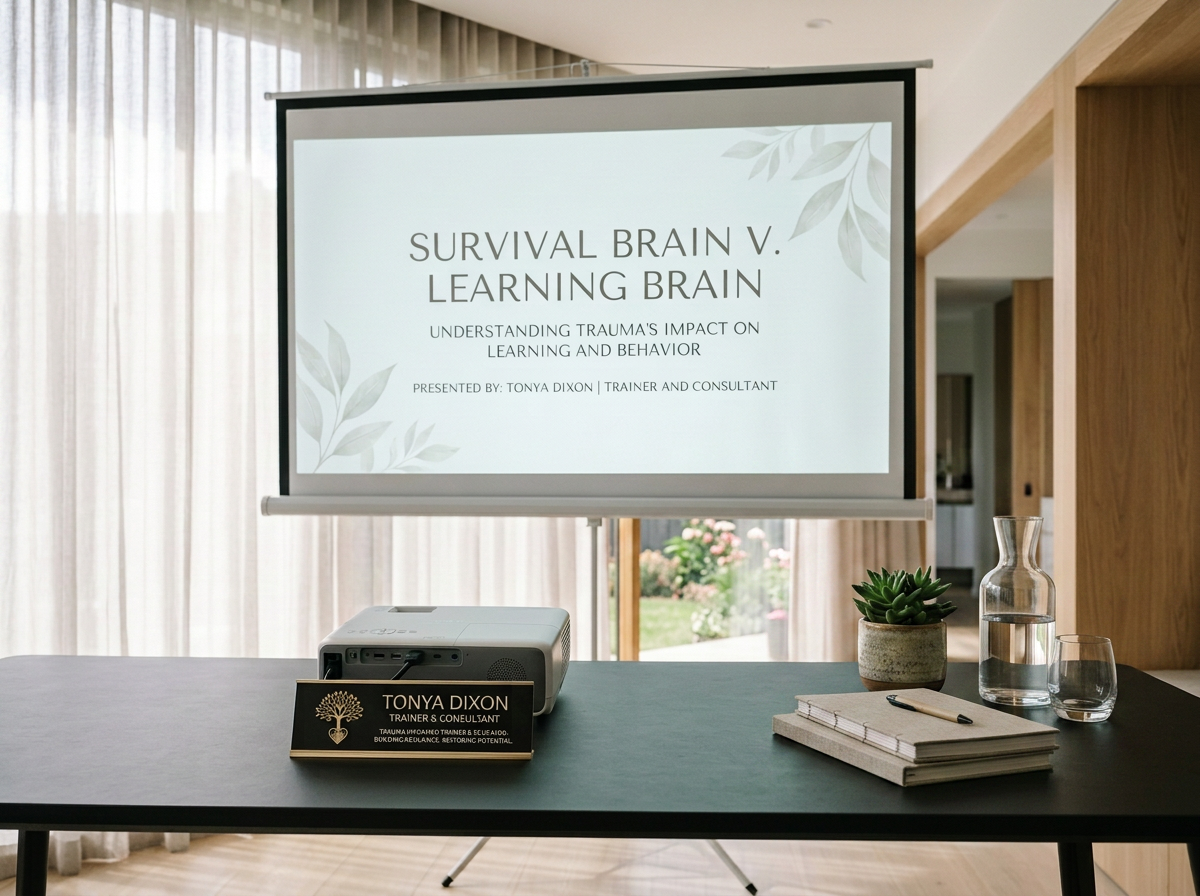
Whether we're discussing Survival Brain vs. Learning Brain, de-escalation, behavior, relationships, or accountability, the goal is the same: help professionals understand what may be happening beneath the behavior—and what they can do differently because of that understanding.

What Your Team Walks Away With
Every training experience is designed with intention—engaging professionals, challenging perspectives, and providing practical strategies they can use immediately.
01
Understanding
Recognize what may be happening beneath challenging behavior and how trauma, stress, and adversity can influence a young person's response.
02
Functional Strategies
Learn realistic, trauma-informed responses and tools staff can put into practice immediately—not just information that stays in the training room.
03
Greater Confidence
Feel better prepared to respond intentionally during difficult moments while maintaining relationships, boundaries, expectations, and accountability.
The goal isn't for your team to leave saying, “That was a good presentation.”
The goal is for them to leave saying, “I know what I can do differently tomorrow.”
Connect With Us on Social